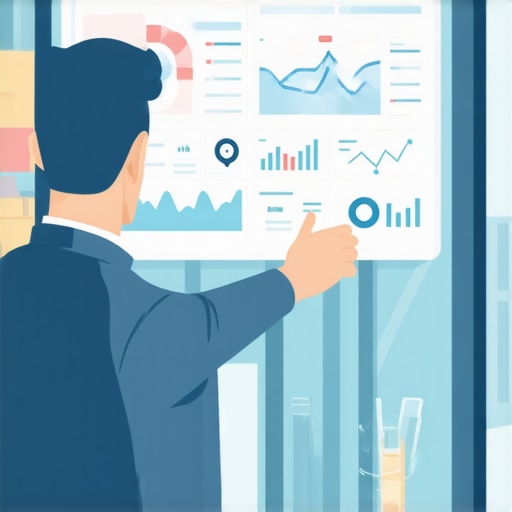
The Reason Your Google Business Profile Impressions Don’t Always Lead to Sales
As a Local SEO Consultant and Google Business Profile Product Expert, I spend my days looking at the “backstage” of thousands of businesses. The most common frustration I hear from business owners sounds like this: “Kevin, my Google Business Profile impressions are through the roof. Thousands of people are seeing my shop on the map, but the phone isn’t ringing. Where are the sales?”
I. Introduction: The “Impression-Action Gap”
In the world of local search, we call this the “Impression-Action Gap.” It is the distance between a user seeing your business name on a screen and that same user deciding to click the “Call” or “Get Directions” button. While high impressions look great on a monthly report, they are a vanity metric if they don’t translate into revenue. Visibility is merely the price of admission; conversion is the actual performance.
To understand the scale of this, we must look at the broader digital ecosystem. Research from Conductor in 2024 indicates that organic search – which includes the Google Map Pack – produces roughly 33% of overall website traffic for key local industries like law, healthcare, and home services. However, a significant portion of that traffic remains “latent.” Users are browsing, comparing, and filtering out businesses that don’t immediately meet their psychological or technical requirements. If you have google business profile impressions but no leads, you aren’t failing at visibility – you are failing at relevance.
II. The Vanity Metric Trap: Why Impressions Can Be Deceiving
The first step to fixing your sales funnel is understanding that not all impressions are created equal. Google classifies impressions into “Discovery” (users searching for a category) and “Direct” (users searching for your specific name). If your impressions are high, you are likely appearing for broad, informational queries.
Google’s algorithm rewards content that matches search intent. However, Google’s primary goal is to provide an answer, not necessarily to make you money. You might be ranking for “how to fix a leaky faucet” (informational intent) when you actually need to be ranking for “emergency plumber near me” (buyer intent). When businesses engage in google business profile optimization, they often make the mistake of targeting high-volume keywords that lack commercial urgency. A thousand views from people looking for DIY tips will never equal ten views from someone with a flooded basement.
To move beyond these surface-level numbers, you must look at how users interact with your data over time. If you want to stop the bleeding, you need to Stop Chasing Rank and Use These 3 Analytics Signals to Find Actual Buyers. By focusing on intent-heavy signals, you can filter out the “noise” of informational impressions and focus on the searches that actually put money in the bank.
III. The Psychological Barrier: “Why Should I Trust You?”
Even if you appear at the very top of the Map Pack, you are competing against two other businesses right next to you. In that split second, the user is performing a subconscious trust audit. They are asking: “Is this business open? Are they reliable? Do they actually do what I need?”
If your profile lacks recent reviews, high-quality photos, or a complete “Services” section, users will bounce. Data consistently shows that businesses with complete profiles are 2.7 times more likely to be considered reputable. By 2026, this psychological vetting will become even more automated through “Neural Review Summaries.” Google’s AI will no longer just show a star rating; it will distill thousands of reviews into a single sentence like: “Customers frequently report that this plumber arrives late but offers fair pricing.”
This is why your review strategy cannot just be about quantity. You need specific customer signals – mentions of specific services, locations, and positive outcomes – to feed the AI the right narrative. If you find your star rating is high but your click-through rate is low, it’s likely because Why Your Review Management Strategy Fails Without These Specific Customer Signals. You need to guide your customers to leave reviews that act as sales copy, not just a “thumbs up.”
Additionally, visual evidence is non-negotiable. A profile with 100+ high-quality, geo-tagged photos of real work (not stock images) will almost always out-convert a competitor with higher impressions but a blank gallery. Users want to see the “proof of work” before they commit to a phone call.
IV. Technical Roadblocks to Conversion
Sometimes, the “Impression-Action Gap” is caused by technical errors that confuse both Google and the user. One of the most frequent issues I see in my consultancy is the “Primary Category Mistake.” Your primary category is the single most important ranking and conversion factor on your profile. If you are a “Personal Injury Attorney” but your primary category is set to “Lawyer,” you will get thousands of impressions from people looking for divorce or real estate law – none of whom will hire you.
Furthermore, your secondary categories must support your primary goal without diluting your relevance. I often see businesses cluttering their profile with 10+ categories, which actually weakens their authority for their main service. Understanding Why Your Secondary Categories Matter More Than Your Main Service Label is critical for ensuring that your impressions are coming from the right audience.
Another “silent killer” is the lack of NAP (Name, Address, Phone) consistency. If your phone number on your GBP doesn’t match your website or your Facebook page, Google’s trust in your profile drops. This inconsistency can lead to a lower google maps ranking service performance, as the algorithm becomes unsure of your business’s legitimacy. Even a small error, like an incorrect “Address Pin” that sends customers to the back alley of your building instead of the front door, can kill a sale at the very last moment. This is why many owners realize The Primary Category Mistake That Pushes Your Shop Off the Map is often the reason their high impressions lead to zero physical visits.
V. The 2026 Landscape: AI Filters and Interaction Data
As we look toward 2026, the way Google measures success is shifting from clicks to “Interaction Data.” Google is increasingly using “Privacy Mesh” drops and AI dashboard filters to determine which businesses are actually providing value to the community. This is fundamentally changing google business profile seo.
Two emerging signals are “Physical Dwell Time” and “Biometric Store Proof.” Google knows, via mobile location history, if a person who searched for your business actually walked through your front door and how long they stayed. If you have 50,000 impressions but Google sees that no one is actually visiting your physical location, your rank google business profile strategy will begin to falter. The algorithm will assume you are irrelevant to the local community, regardless of your keyword optimization.
To combat this, you must give users a reason to interact with your profile before they even visit. This includes using GBP Updates (Posts) effectively. You need to learn How to write profile updates that stop the scroll and drive physical visits. These updates should include “Local Offers” or “Event Check-ins” that encourage the user to engage with the profile, creating the interaction signals Google craves. For a deeper dive into these future-proof signals, see 3 Ways Physical Dwell Time Triggers a Maps Ranking Lift in 2026.
VI. Conclusion & Action Plan
The gap between impressions and sales is where most local businesses lose their marketing ROI. If you are seeing high numbers in your Google Insights but a stagnant bank account, it is time to stop celebrating “visibility” and start auditing “relevance.”
Your action plan should be as follows:
- Audit Your Intent: Are you ranking for “what is” keywords or “buy now” keywords?
- Refresh Your Social Proof: Do your reviews address the specific pain points of your target customers?
- Fix Technical Errors: Verify your primary category and ensure your address pin is pinpoint accurate.
- Leverage Modern Tools: Use professional local seo tools to track your “Share of Voice” rather than just raw impressions.
- Future-Proof: Start focusing on dwell time and interaction signals to stay ahead of the 2026 AI updates.
Don’t let your Google Business Profile become a “ghost town” of high impressions and zero life. By using a professional google maps lead generation tools approach, you can turn those passive viewers into active, high-paying customers. If you are ready to dig deep into the data, follow The specific audit steps that reveal why your shop is losing local leads to identify the exact point where your customers are dropping off.
Visibility gets you on the map; relevance gets you the sale. It’s time to bridge the gap.